How it works
One pipeline from idea to boards in hand. Every step is checked before the next one starts.
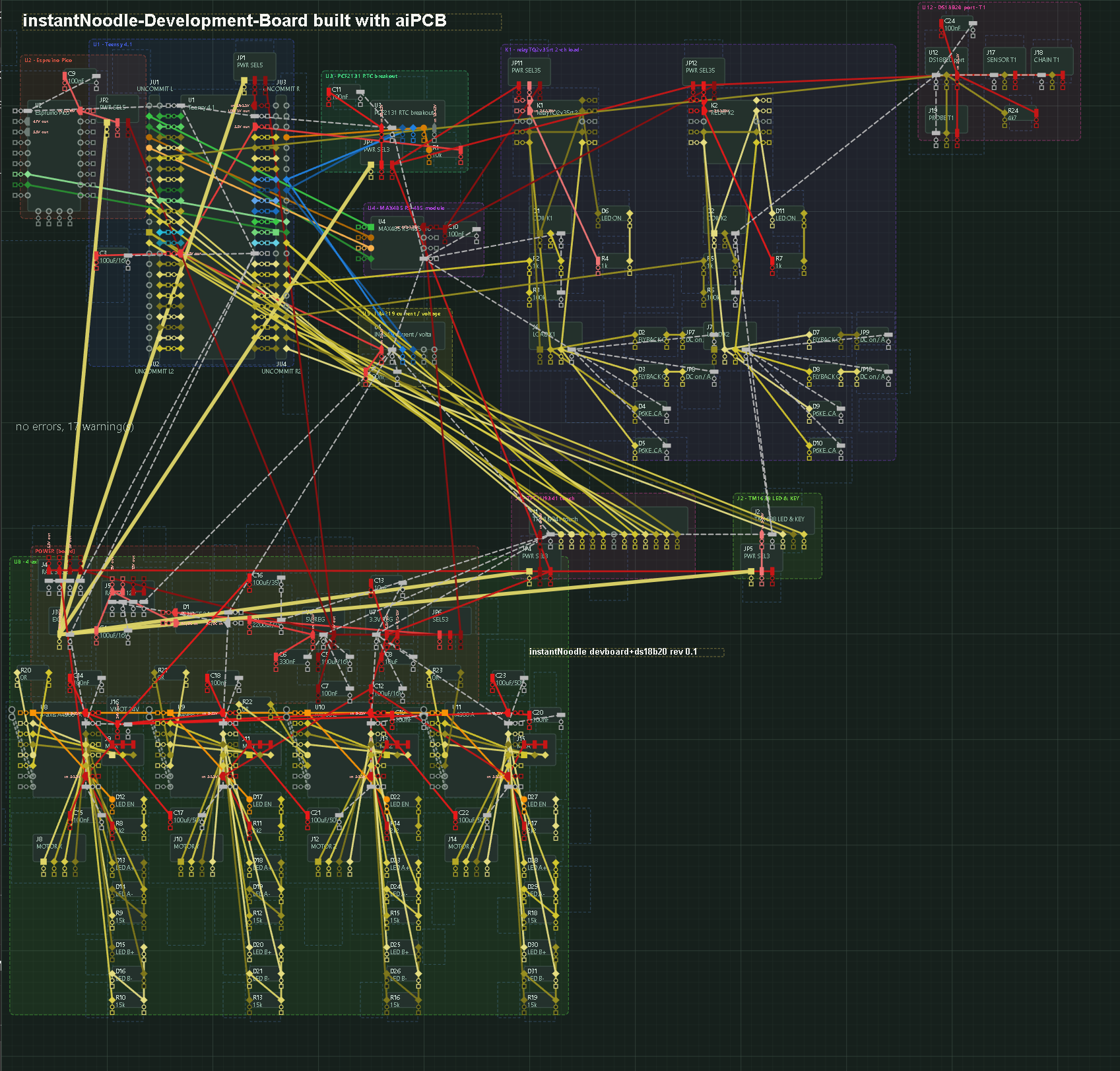
Place modules - microcontrollers, sensors, drivers, connectors - and let Auto wire them by their interfaces: I²C, SPI, UART, 1-Wire, power rails.
An electrical check on every edit: missing supplies, voltage mismatches, unverified pin orders - fixed on the canvas before anything is made.
Altium Designer places, routes and design-rule-checks the board unattended, then writes the Gerber and drill files. Nothing leaves with a DRC violation.
The fab quotes the real board first. The customer pays that quote plus the aiPCB service; aiPCB places the order, checks the boards and sends them on.
It starts as a sketch
This is the whole design input for the board below: modules placed on the aiPCB canvas and wired by their interfaces. Everything after this - checks, placement, routing, DRC and the fab files - is done by the pipeline.
Watch it happen
A real run in under two minutes, captured from the screen: picking and placing modules with their nets connected automatically, the checks, the production job, Altium Designer placing and routing all 1265 connections, the design rule check, the 16 fab files, the BOM and how long it all took.
...and becomes a real board
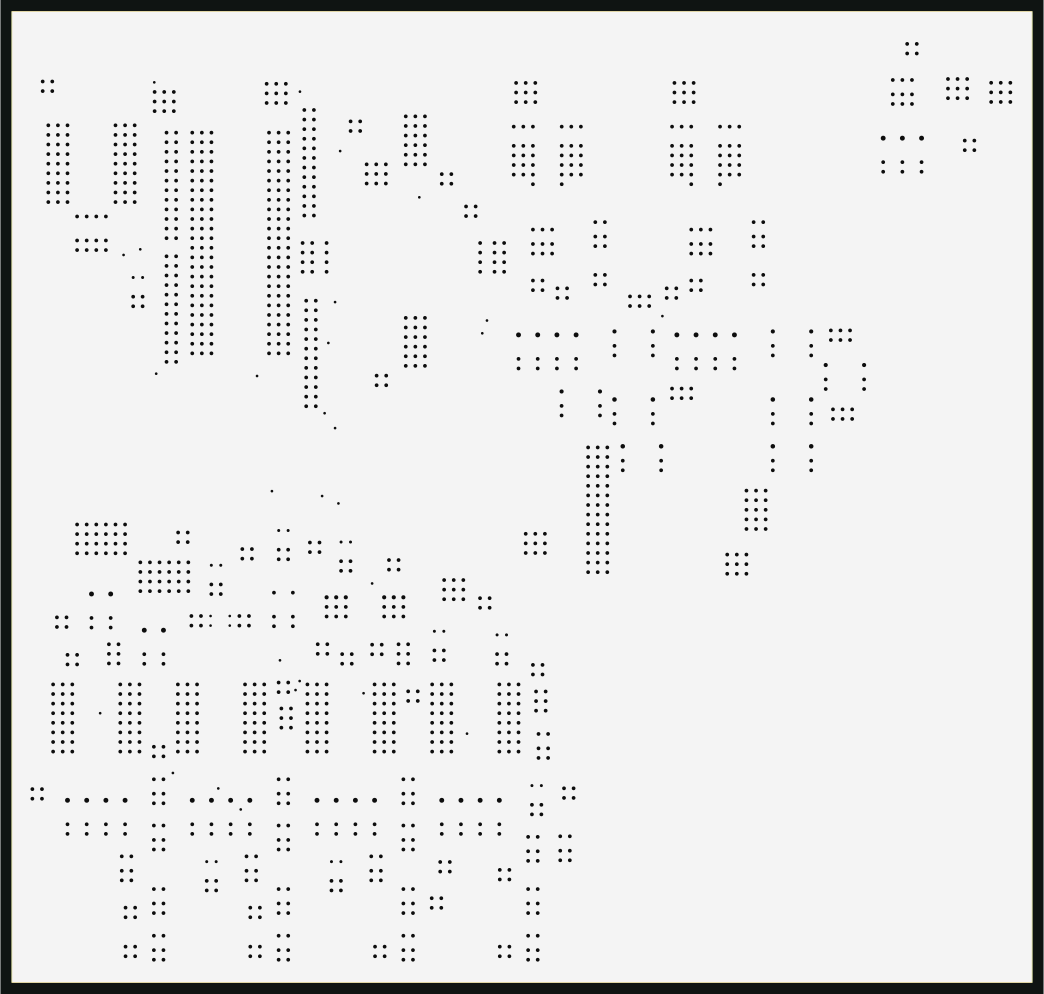
This picture is drawn from the Gerber files of a finished aiPCB job - the same files a fab makes the board from.
Extra headers on every module
aiPCB adds them automatically, so a development board can be measured, re-wired and re-powered by hand - without cutting a single track.
A row of test pads beside every module pin, each on that pin's net - clip on a scope or a meter without touching the module.
A second row beside the probes for jumper wires - add or re-route a connection by hand.
Four 2×12 strips, two on each side of the Teensy - 48 shunts, one per pin. Pull a shunt and that pin is free for something else.
pwrSel jumpers set each module's supply with one shunt - external, 3.3 V or 5 V; relay coils choose 3 V or 5 V the same way.
What comes with every board
Everything a fab or an assembler needs, in one package.
Gerber and drill files, fab notes with layer stack, finish and smallest track and hole, plus a README for ordering.
Pick-and-place [CPL] and an assembly BOM with supplier part numbers, ready for an assembly service.
Top, bottom, each layer, overlays and drill sizes - drawn from the fab files so what you see is what gets made.
Checked modules with verified pin orders; new modules are added through Ask AI and confirmed in a pin check before they reach a board.
Probe and connection rows beside every module, uncommit strips on the Teensy and power-select jumpers - easy to measure, easy to rework.
No estimate is ever charged: the fab's own quote comes back before the customer pays.
For PCB fabrication partners
aiPCB sends fabs clean, rule-checked work and handles its own customers end to end.
- Typical orders: 2-layer prototypes and development boards, 5-10 pieces, 1.6 mm FR-4, HASL or ENIG.
- Files: RS-274X Gerbers, Excellon drill, board outline, CPL and BOM - every set design-rule-checked to 0 violations.
- Ordering: quote, order and status tracking are built into aiPCB's order flow, ready for a partner API.
- Software developed in-house: the desktop app, the order gateway and the Altium automation.
Partnership enquiries: aipcb.info@mrdaniel.com